Quality Food
August 7, 2026
Comment(0)
A Beginner’s Guide to Traditional Eastern Mediterranean Dishes
A Beginner’s Guide to Traditional Eastern Mediterranean Dishes
If you have ever bitten into a perfectly seasoned shawarma wrap, scooped warm hummus onto fresh flatbread, or watched a charcoal grill come to life with lamb kofte, you already know the power of Eastern Mediterranean food. But there is so much more to explore beyond the dishes most people already recognise.
The Eastern Mediterranean stretches across Lebanon, Syria, Turkey, Greece, Egypt, Israel, Jordan, and the Palestinian territories. Each country brings its own culinary character to the table, and yet the entire region shares a common thread: an emphasis on fresh ingredients, bold spices, slow cooking techniques, and food that brings people together.
At Olives Meze Shawarma, nestled in the heart of Tooting Market in South London, we have built our menu around the authentic flavours of this remarkable region. Whether you are new to Eastern Mediterranean cuisine or a lifelong fan looking to deepen your understanding, this guide is your starting point.
What Defines Eastern Mediterranean Cuisine?
Eastern Mediterranean food is built on a philosophy as much as a set of ingredients. The cooking of this region is rooted in the idea that good food should be honest, seasonal, and shared. Meals are not rushed. They are constructed slowly, with care, and served generously.
Key characteristics that define the cuisine include:
- Olive oil as the primary cooking fat, used liberally and with pride.
- A heavy reliance on legumes such as chickpeas, lentils, and broad beans.
- Fresh herbs including parsley, mint, coriander, and dill used generously.
- Warming spices like cumin, coriander, sumac, za’atar, and cinnamon.
- Charcoal grilling as a cornerstone cooking technique for meats and vegetables alike.
- Slow fermentation and preservation methods, from pickled vegetables to aged cheeses.
Research published by nutritional scientists consistently identifies the Mediterranean diet as one of the healthiest in the world, with strong associations with reduced cardiovascular disease, better cognitive health, and longer life expectancy. The Eastern branch of this dietary tradition is particularly rich in plant-based dishes, making it accessible to a wide range of dietary preferences.
The Art of Meze: Small Dishes with Big Flavour
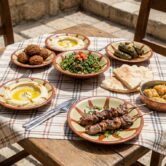
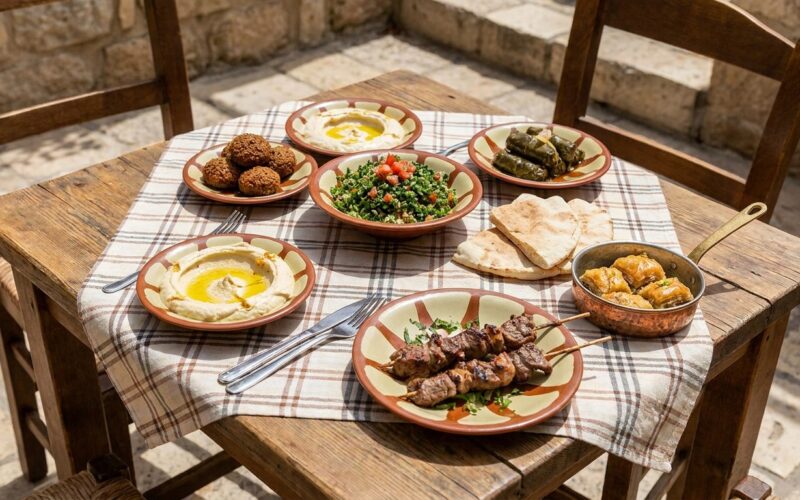
No introduction to Eastern Mediterranean food is complete without meze. The word itself comes from the Persian ‘maza’, meaning taste or relish, and that is precisely what meze represents: an array of small dishes designed to stimulate conversation, appetite, and a sense of communal enjoyment.
In Lebanon, Turkey, Greece, and across the Levant, meze can be a meal in itself or the opening act of something more elaborate. The classic meze spread typically includes several of the following:
Hummus
Perhaps the most globally recognised Eastern Mediterranean dish, hummus is a smooth blend of cooked chickpeas, tahini (sesame paste), lemon juice, garlic, and olive oil. The key to an exceptional hummus lies in the quality of the tahini and the patience of the cook. At Olives Meze Shawarma, our hummus is prepared fresh in-house daily, using a recipe refined over years to achieve that deep, nutty richness that pre-made versions simply cannot replicate.
Baba Ganoush
Baba ganoush is a smoky, silky dip made from chargrilled aubergine blended with tahini, garlic, lemon, and olive oil. The critical step is placing the aubergine directly over a flame until the skin blackens and the flesh becomes tender, imparting that signature smoky flavour. It is an ancient dish with roots traceable to the Levantine region, and it remains one of the most beloved items on any authentic meze spread.
Tabbouleh
Tabbouleh is a Lebanese salad that often surprises newcomers with its focus on fresh herbs rather than grain. A traditional tabbouleh is predominantly flat-leaf parsley, with smaller amounts of bulgur wheat, ripe tomatoes, spring onions, mint, lemon juice, and olive oil. It is refreshing, bright, and entirely plant-based. The balance of acid and herb is what makes it memorable.
Falafel
Falafel are deep-fried balls or patties made from ground chickpeas or fava beans, blended with herbs, garlic, and spices. Their origin is debated across Egypt, Israel, Palestine, and Lebanon, which tells you something about their cultural significance across the Eastern Mediterranean. A properly made falafel is crisp on the outside, vibrantly green on the inside, and rich with the flavour of cumin and coriander. We serve ours wrapped, plated, and always made fresh to order.
Grilled Meats: The Charcoal Tradition
The charcoal grill is central to Eastern Mediterranean cooking in a way that goes beyond technique. It is a cultural statement. Grilling over open flame is a social act, tied to hospitality, celebration, and the understanding that food cooked this way simply tastes better.
Shawarma
Shawarma is one of the great street foods of the Eastern Mediterranean. Layers of marinated meat — typically chicken, lamb, or beef — are stacked onto a vertical rotisserie and slow-cooked for hours. As the outer layers crisp and caramelise, they are shaved off and served in flatbreads with fresh vegetables, pickles, and sauce.
At Olives Meze Shawarma, our shawarma is marinated overnight in a house spice blend developed and refined over years. We do not use pre-made marinades or shortcuts. The result is a depth of flavour that our regulars tell us keeps them coming back. You can find us at Tooting Market, where the grill runs daily and the shawarma is always made to order.
.
Mixed Grill Platters
The mixed grill platter is a celebration dish across the entire Eastern Mediterranean. It brings together a selection of grilled meats — often chicken, lamb, and beef — alongside accompaniments such as rice, salad, flatbread, and dips. At Olives Meze Shawarma, our Mix Grill Combo and Family Platter are designed exactly in this spirit: generous, varied, and built for sharing.
Regional Specialities Worth Knowing
Beyond the dishes most people recognise, the Eastern Mediterranean is home to a wealth of regional food specialities that deserve wider attention.
Koshari (Egypt)
Koshari is Egypt’s national dish and one of the most extraordinary examples of layered flavour in world cuisine. It combines macaroni, lentils, and rice, topped with crispy fried onions, a spiced tomato sauce, and a vinegar-garlic dressing. It is entirely plant-based, enormously satisfying, and completely unique. Street vendors in Cairo have been serving it from large pots for well over a century.
Musakhan (Palestine)
Musakhan is considered the national dish of Palestine and is a powerful expression of the region’s culinary identity. It features roasted chicken layered on top of flatbread (taboon) soaked in olive oil and topped with caramelised onions, sumac, and toasted pine nuts. The sourness of the sumac against the sweet onions and rich chicken creates a flavour profile that is entirely distinctive.
Halloumi (Cyprus)
Halloumi is a semi-hard cheese made from a mixture of goat and sheep milk, originally from Cyprus. Its high melting point makes it ideal for grilling, where it develops a golden crust while remaining firm inside. Grilled halloumi has become a beloved component of the broader Eastern Mediterranean food culture, particularly popular as a vegetarian option. At Olives Meze Shawarma, our grilled halloumi is a firm favourite with our plant-based customers.
Pide and Gözleme (Turkey)
Turkish cuisine contributes several iconic breads and flatbreads to the Eastern Mediterranean tradition. Pide is a boat-shaped flatbread topped with minced meat, cheese, or vegetables and baked in a wood-fired oven. Gözleme is a thin, folded dough pancake filled with spinach and feta, potato, or spiced minced lamb. Both are deeply rooted in Turkish street food culture and remain popular across the region.
Plant-Based Eastern Mediterranean: More Than an Afterthought
One of the most important things to understand about traditional Eastern Mediterranean food is that plant-based eating is not a modern adaptation. It has always been central to the cuisine. Centuries of history, economics, and religious fasting traditions across Islam, Christianity, and Judaism have produced a kitchen that is extraordinarily rich in vegetarian and vegan dishes.
Dishes like mujadara (lentils and rice with caramelised onions), ful medames (slow-cooked fava beans), and various stuffed grape leaf preparations are ancient, nourishing, and entirely plant-based. At Olives Meze Shawarma, we take our vegetarian and vegan offering seriously. Our falafel wraps, hummus, baba ganoush, and vegan sides are prepared with the same attention and quality as our meat dishes, because we believe every customer deserves food made with genuine care.
Where to Experience Authentic Eastern Mediterranean Food in London
London is one of the best cities in the world for Eastern Mediterranean food, with communities from across the region bringing their culinary traditions to neighbourhoods across the capital. Tooting, in particular, has long been recognised as one of London’s most exciting food destinations — a place where independent traders serve food rooted in genuine cultural heritage.
Olives Meze Shawarma is located inside Tooting Market at Unit 3, 20 Totterdown Street, London SW17 8TA. We are easily accessible from Tooting Broadway tube station on the Northern line, and we are well served by local bus routes.
How to Begin Exploring Eastern Mediterranean Food at Home
If you want to start cooking Eastern Mediterranean food at home, the good news is that the core pantry is relatively simple to build. Stock olive oil, tahini, canned chickpeas, lentils, cumin, coriander, sumac, za’atar, and flat-leaf parsley. With these ingredients alone, you can produce hummus, tabbouleh, and a basic lentil soup.
For grilled dishes, the quality of your marinade and the heat of your cooking surface matter most. If you have access to a charcoal grill, use it. If not, a hot cast iron pan will give you a reasonable approximation of the caramelised crust that defines great kofte or chicken pieces.
That said, there is no substitute for the real thing made by people who have spent years perfecting their craft. When you want to experience authentic Eastern Mediterranean meals without the effort of cooking, you know where to find us.
Visit Olives Meze Shawarma at Tooting Market or order online via Uber Eats, Deliveroo, or Just Eat. Call us on 020 3380 0334 or visit www.olivesmezeshawarma.co.uk to explore our full menu.
Frequently Asked Questions
Everything you need to know about traditional Eastern Mediterranean cuisine.
The most widely recognised traditional Eastern Mediterranean dishes include hummus, baba ganoush, falafel, shawarma, tabbouleh, kofte, and various forms of rice and lentil dishes. These dishes vary in their precise preparation across countries such as Lebanon, Turkey, Egypt, and Jordan, but share common threads of spice, freshness, and communal eating. At Olives Meze Shawarma in Tooting Market, you will find many of these classics prepared authentically and fresh every day.
Yes. The Eastern Mediterranean diet is widely regarded by nutritional researchers as one of the healthiest dietary patterns in the world. It is rich in plant-based foods, healthy fats from olive oil and nuts, legumes, whole grains, and lean proteins. It is naturally low in processed foods and refined sugars. The diet has been associated in numerous studies with reduced risk of heart disease, type 2 diabetes, and certain cancers.
Both meze and tapas refer to the concept of sharing small dishes, but they come from entirely different culinary traditions. Tapas originates in Spain and typically accompanies drinks as a snack. Meze comes from the Eastern Mediterranean and Middle East, and while it can accompany drinks, it is often a full meal in itself, comprising a wide range of cold and hot dishes served together on the table. The flavour profiles, ingredients, and cultural context are distinct.
Shawarma, kebab, and doner are all related concepts that have evolved differently across the region. Shawarma refers specifically to the Levantine preparation of marinated meat cooked on a vertical rotisserie and typically served with fresh accompaniments including pickles, tomatoes, garlic sauce, and flatbread. Doner kebab is the Turkish version, which gained widespread popularity in Germany and the UK. While they share a cooking method, the marinades, spice profiles, and serving styles differ considerably.
Absolutely. Eastern Mediterranean cuisine has a long and deeply rooted tradition of plant-based cooking that predates modern veganism by centuries. Dishes such as falafel, hummus, baba ganoush, tabbouleh, ful medames, mujadara, and various stuffed vegetable preparations are entirely vegan. At Olives Meze Shawarma, our vegan menu is extensive and made with the same care as our meat dishes.
The spice repertoire of Eastern Mediterranean cooking is rich and varied. Core spices include cumin, ground coriander, sumac, za'atar (a herb and spice blend), allspice, cinnamon, turmeric, and paprika. Fresh herbs such as flat-leaf parsley, mint, and dill are also used extensively. One of the most distinctive ingredients is sumac, a tangy, deep-red berry ground into powder that adds a citrusy sharpness to salads, grilled meats, and rice dishes.
London has a rich and diverse Eastern Mediterranean food scene, with strong communities from across the Levant, Turkey, and North Africa contributing to the city's culinary landscape. For a genuinely authentic experience, we recommend visiting Olives Meze Shawarma at Tooting Market, South London. Our kitchen is built around traditional recipes, fresh ingredients, and a genuine passion for the food of this region. You can also order delivery through Uber Eats, Deliveroo, or Just Eat.
Final Thoughts
Eastern Mediterranean cuisine is not a trend. It is one of the oldest and most sophisticated culinary traditions on earth, shaped by thousands of years of trade, migration, agriculture, and cultural exchange. Every dish tells a story about the land it comes from and the people who developed it.
Whether you are discovering it for the first time or returning to flavours you already love, there is always something new to find in this rich and generous food culture. At Olives Meze Shawarma, we are proud to be part of that story — bringing authentic Eastern Mediterranean meals to the streets of London, one plate at a time.
Come and find us at Tooting Market. We are the ones with the grill on, the smell of spices in the air, and food that is genuinely worth the trip.