Quality Food
September 24, 2026
Comment(0)
Traditional Spice Blends Used Across the Mediterranean: A Deep Dive Into Regional Seasoning Mixes
Traditional Spice Blends Used Across the Mediterranean: A Deep Dive Into Regional Seasoning Mixes
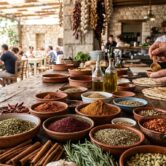
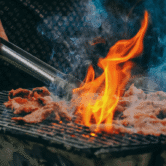
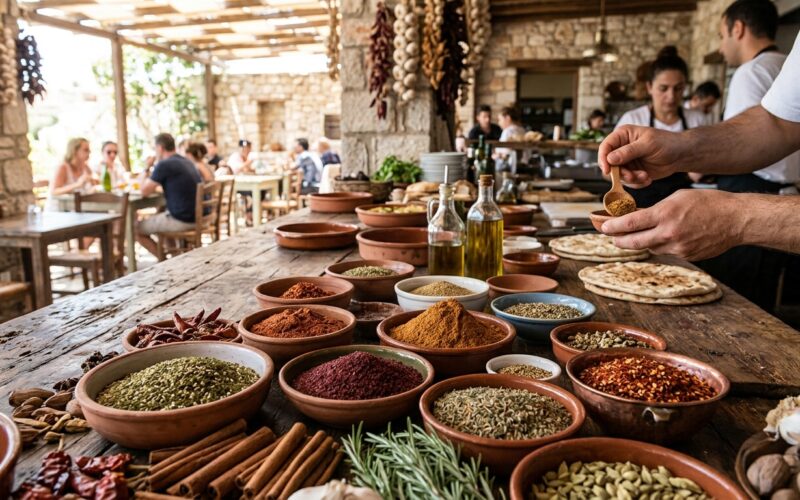
Walk into any serious Mediterranean kitchen and the first thing that hits you is not the sizzle of the grill or the warmth of fresh bread. It is the smell.
A layered, complex, deeply satisfying aroma built from spice blends that have been refined across centuries and carried across borders by traders, travellers, and generations of home cooks who refused to let the old ways die.
At Olives Meze Shawarma, tucked inside the vibrant heart of Tooting Market in South London, we understand this connection deeply. Our kitchen is built on tradition. Every marinade we use, every spice blend we mix, every sauce we prepare from scratch carries the fingerprints of Mediterranean culinary history. That is what separates real food from fast food, and it is exactly what we serve every day.
This article takes you through the traditional spice blends that define authentic Mediterranean cooking, where they come from, what they contain, and why they matter so much to the flavour of every dish we make.
Why Spice Blends Are the Foundation of Mediterranean Cooking
The Mediterranean basin spans more than 46,000 kilometres of coastline, touching parts of Southern Europe, North Africa, and the Middle East. Within this vast region, civilisations rose and fell, trade routes shifted, and ingredients moved freely between cultures. The spice blends that emerged from this history are not accidents. They are the result of centuries of culinary exchange, local adaptation, and a deeply rooted respect for flavour.
Research published in food science journals consistently shows that spices do far more than season food. They interact with fats, proteins, and heat to create entirely new flavour compounds through processes like the Maillard reaction. Traditional spice blends harness this chemistry intuitively, combining ingredients that complement and amplify one another in ways that modern food science is still working to fully explain.
For us at Olives Meze Shawarma, this is not theory. It is the reason our shawarma marinade tastes the way it does, and why our customers describe our food as something they have not tasted anywhere else in London.
Za'atar: The Herb Blend of the Eastern Mediterranean
Za'atar is perhaps the most iconic spice blend of the Eastern Mediterranean, used extensively across Lebanon, Syria, Jordan, Palestine, and Turkey. At its core, za'atar contains dried thyme or wild oregano, sesame seeds, sumac, and salt. But the proportions and exact herbs vary by region, family, and tradition, making every version of za'atar its own expression of place.
The sumac in za'atar provides a fruity, lemony tartness that no citrus can quite replicate. Sumac berries are ground into a deep burgundy powder that adds both acidity and a mild astringency to the blend. This balance of earthy herbs, nutty sesame, and sharp sumac is what makes za'atar so versatile. It works on grilled meats, roasted vegetables, flatbread drizzled with olive oil, and soft cheeses like labneh.
We incorporate the principles of za'atar seasoning across several elements of our menu at Olives Meze Shawarma, particularly in our vegetarian and vegan offerings where bold herbal flavour needs to carry the dish without relying on meat.
Baharat: The All-Purpose Spice Mix of Arab Cuisine
The word baharat simply means 'spices' in Arabic, and this blend lives up to its name as one of the most all-purpose seasoning mixes in Mediterranean and Middle Eastern cooking. While the exact composition varies by country and even by household, a standard baharat blend typically includes black pepper, coriander, cumin, cloves, cinnamon, cardamom, nutmeg, and paprika.
What makes baharat so powerful as a cooking spice is the way it bridges sweet and savoury. The warm sweetness of cinnamon and cardamom sits alongside the earthiness of cumin and coriander, with black pepper and cloves adding depth and a gentle heat. When applied to meat and exposed to high heat, whether on a grill, a spit, or in a hot oven, these compounds combine to create a complex crust of flavour that is genuinely difficult to replicate.
Baharat is central to how we season many of the grilled proteins on our menu. Our lamb kofte and mixed grill dishes carry the warmth and complexity of this blend, which is why the first bite delivers something far richer than basic seasoning.
Ras el Hanout: The Crown Jewel of North African Spice Blending
If baharat is the everyday spice blend of Arab cooking, ras el hanout is its more elaborate cousin from North Africa. The name translates from Arabic as 'head of the shop' or 'top of the shop', indicating that it was traditionally made from the best spices a merchant had available. A typical ras el hanout can contain anywhere from 10 to 30 individual spices, including cumin, coriander, ginger, turmeric, black pepper, cinnamon, cardamom, cayenne, allspice, cloves, and sometimes even rose petals or lavender in the Moroccan tradition.
This complexity is not excess for its own sake. Each ingredient plays a role. The turmeric adds colour and a mild bitterness. The ginger adds warmth and a slight heat. The floral elements soften the overall profile and prevent the spices from feeling harsh or one-dimensional. The result is a seasoning that is warming, aromatic, deeply layered, and genuinely difficult to pin down, which is exactly what makes food seasoned with ras el hanout so memorable.
Advieh: The Persian Approach to Spice Blending
Moving to the eastern edges of the Mediterranean and into Persian culinary tradition, advieh is the spice blend that defines Iranian cooking. It typically contains rose petals, cumin, cinnamon, cardamom, coriander, and turmeric. The inclusion of dried rose petals is distinctive and gives Persian food an almost floral quality that distinguishes it immediately from other regional traditions.
What is fascinating about advieh from a culinary research perspective is the way it demonstrates the Silk Road's influence on Mediterranean and Middle Eastern food. Many of the spices in advieh, including cardamom, cinnamon, and pepper, came to Persia through ancient trade routes from South Asia. They were absorbed into the local culinary tradition so thoroughly that they now feel entirely native.
Seven Spice (Sab'a Baharat): The Levantine Classic
Seven spice, or sab'a baharat in Arabic, is a blend specific to the Levantine tradition, particularly common in Lebanese, Syrian, and Palestinian cooking. Despite the name implying exactly seven ingredients, the actual number can vary. A common version includes black pepper, allspice, cinnamon, cloves, fenugreek, coriander, and nutmeg, though paprika, ginger, and cumin sometimes appear in different family recipes.
This blend is what gives traditional Lebanese grilled meats, rice dishes, and slow-cooked stews their characteristic warmth and depth. It is perhaps the closest thing to a universal seasoning in Levantine cooking, used across meat, vegetable, and grain dishes with equal success. When our team at Olives Meze Shawarma develops marinade profiles for our grilled dishes, the philosophy behind blends like seven spice is always part of the conversation.
Dukkah: The Egyptian Nut and Spice Blend
Originating in Egypt, dukkah is unlike most other Mediterranean spice blends in that it contains nuts as a primary ingredient. A classic dukkah recipe combines roasted hazelnuts or chickpeas with sesame seeds, coriander, cumin, salt, and pepper. The mixture is ground coarsely to produce a dry, crumbly blend that adds both texture and flavour.
Traditionally, dukkah is served with bread and olive oil for dipping, but it also works exceptionally well as a crust for grilled fish and chicken, or sprinkled over hummus and salads for an added layer of nutty, spiced complexity. Its growing popularity in the UK food scene reflects a broader appreciation for the depth and variety within Mediterranean spice culture.
How Authentic Spice Blends Shape Our Menu at Olives Meze Shawarma
At Olives Meze Shawarma, we do not use pre-made seasoning packets or mass-produced spice mixes. Our spice blends are our own, developed and refined in our kitchen through a process that is informed by these traditional regional combinations. When you eat our slow-roasted shawarma, you are tasting a marinade that has been built on the same spice principles that cooks across the Mediterranean have followed for centuries.
Our lamb kofte draws on the baharat tradition. Our chicken dishes carry the warmth of cumin, coriander, and paprika. Our falafel is seasoned with fresh herbs and spices that reflect the za'atar principle of bold, herb-forward flavour balanced with acidity. Even our sauces are built on these foundations.
This commitment to authentic seasoning is why customers who have eaten real Mediterranean food in Lebanon, Turkey, Morocco, or Egypt tell us that our food tastes like the genuine article. That is not a coincidence. It is the result of taking spice seriously.
The Health Dimension of Mediterranean Spice Blends
Beyond flavour, it is worth noting that the spices within traditional Mediterranean blends carry significant health credentials. Cumin has been associated with improved digestion and antimicrobial properties. Turmeric contains curcumin, a compound extensively studied for its anti-inflammatory effects. Coriander has been linked to blood sugar regulation. Cinnamon has shown promise in improving insulin sensitivity.
The Mediterranean diet is regularly ranked by nutritional researchers as one of the healthiest dietary patterns in the world, and the spice blends that characterise this cuisine contribute meaningfully to that designation. Eating food seasoned with authentic Mediterranean spice mixes is not just a sensory pleasure. It is also, in a very real sense, good for you.
At Olives Meze Shawarma, we take particular pride in offering a menu where bold flavour and nutritional integrity coexist. Our protein gym boxes, salad options, and fresh wraps reflect this balance. You do not have to choose between food that tastes extraordinary and food that is genuinely good for you.
Where to Experience Authentic Mediterranean Spice Blends in London
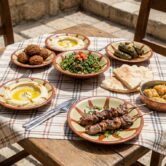
If you want to understand what traditional Mediterranean spice blends actually taste like in practice, the best approach is straightforward: eat food made by people who genuinely care about using them correctly. Olives Meze Shawarma at Tooting Market is exactly that kind of kitchen.
Frequently Asked Questions
Q1: What is the most commonly used spice blend across the Mediterranean?
While no single blend dominates the entire Mediterranean region, baharat and za'atar are among the most widely used across the Eastern Mediterranean, Levant, and parts of North Africa. Each country and kitchen adapts these blends to local tastes and traditions.
Q2: What makes authentic Mediterranean spice blends different from supermarket mixed spices?
Authentic blends are made from freshly sourced, whole spices that are ground or combined in proportions designed for specific culinary applications. Supermarket mixed spices are typically standardised for mass production and tend to lack the balance and complexity of hand-crafted traditional blends. The difference in flavour is significant.
Q3: Are Mediterranean spice blends suitable for vegetarian and vegan cooking?
Absolutely. Blends like za'atar, dukkah, and ras el hanout are used extensively in plant-based Mediterranean cooking and are entirely free from animal products. At Olives Meze Shawarma, our falafel, hummus, and vegetarian wraps are seasoned with the same care as our grilled meat dishes.
Q4: Can I recreate Mediterranean spice blends at home?
Yes, and we encourage it. Most of the individual spices in blends like baharat, seven spice, and za'atar are widely available. However, sourcing whole spices and toasting them before grinding will produce a noticeably more complex result than buying pre-ground versions. The quality of each individual spice determines the quality of the final blend.
Q5: Does Olives Meze Shawarma use authentic Mediterranean spice blends in their food?
Yes. We develop and use our own spice blends in-house, informed by the traditional regional combinations covered in this article. We do not use pre-made mass-produced seasoning. Every marinade, rub, and sauce on our menu is built from scratch using quality ingredients.
Q6: What is the difference between baharat and seven spice?
Baharat is a broad category of spice blend found across the Arab world, with each region producing its own version. Seven spice, or sab'a baharat, is a specific Levantine variation associated with Lebanese and Syrian cooking. Seven spice tends to be more allspice-forward and aromatic, while other baharat variants may include paprika or local herbs that shift the flavour profile considerably.
Q7: Where can I eat authentic Mediterranean food in London?
Olives Meze Shawarma at Tooting Market in South London is one of the most highly regarded destinations for genuine Mediterranean food in the city. Our menu spans shawarma, grilled meats, falafel, meze, and fresh wraps, all made fresh daily using traditional recipes and authentic spice blends. Visit us at Unit 3, Tooting Market, SW17 8TA, or contact us to find out more.